




Table of Contents
What Is an Original Equipment Manufacturer (OEM)?
Finding OEM Manufacturers on Globalsources.com
Original Equipment Manufacturer Example
Who Uses Original Equipment Manufacturers?
What Is the Difference Between OEM and ODM?
Have you ever wondered how your favorite gadgets and electronic items come to life? Well, an Original Equipment Manufacturer normally plays a key part in the production of all high-quality goods. An OEM is a business that creates the components and machinery utilized in the products of other businesses. They produce circuit boards, processors, and other hardware, which are the basic parts of a machine or device.
Although these businesses operate in the background, their influence on the things we use every day is clear. The devices and appliances we rely on wouldn't exist without OEMs' knowledge and creativity. So, whether you're working on your laptop, scrolling through your phone, or boiling your daily coffee, take a moment to acknowledge the hard work and dedication of the OEMs that make it all possible.
What Is an Original Equipment Manufacturer (OEM)?
An original equipment manufacturer is a business that creates parts or goods that are sold to another business, which in turn uses those parts to create its own goods under its own brand name. In other words, an OEM creates goods that are used by another business to create a finished product. The majority of OEMs work in a variety of sectors, including automotive, electronics, and aerospace.
For instance, an aircraft engine manufacturer may sell their engines to an aircraft manufacturer, who will then use them in their own aircraft. OEMs are essential to the manufacturing process because they offer high-quality parts that may be used to create a variety of goods. They can also manufacturers in cutting costs by producing parts more efficiently than the former could, internally. Overall, OEMs play a significant role in numerous supply chains, and a variety of sectors and applications use their goods.
Finding OEM Manufactures on Globalsources.com
Global Sources is a B2B online marketplace that links clients from all over the world with reputable Chinese and other Asian suppliers. Since its founding in 1970, it has grown to be one of the most reputable and well-known names in the sector. Global Sources' broad selection of goods and providers is among its standout qualities. The marketplace promises more than 20,000 certified suppliers from China and other Asian countries, as well as over a million active customers. This implies that you may probably find a suitable source on Global Sources for whatever kind of goods you're looking for.

The degree of openness and confidence that Global Sources offers is another benefit of adopting it. You can trust that you are doing business with reputable and authentic manufacturers since every supplier on the site has been meticulously researched and validated. Global Sources also provides a variety of tools and services, including factory visits, product inspections, and supplier audits, to assist buyers in validating suppliers.
Key Features
Global Sources' OEM manufacturing services are one of its primary advantages. Several of the platform's vendors provide OEM service products, which allows them to produce goods in accordance with your specifications and branding demands. This is especially helpful if you want to develop your own brand or make items specifically for your company.
Simply perform a search for the item you're interested in and filter the results by OEM capabilities to locate OEM manufacturers on Global Sources. To submit your product specifications and obtain quotations from several vendors, you may also utilize the platform's RFQ (request for quotation) tool. Compared to contacting providers one at a time, this can save you time and effort.
In general, Global Sources is a fantastic resource for locating OEM producers and other trustworthy suppliers in China and other Asian nations. It is a dependable option for companies of all sizes because of its extensive product selection, recognized suppliers, and openness.
Start Sourcing Journey Now
Why Is OEM Used?
Many industries, including electronics, automotive, and aerospace, heavily rely on OEM parts and components. OEM is used for the following reasons:
1. Cuts Production Costs
The ability to save money and lower manufacturing costs is one of the key justifications for using OEM parts and components. Instead of having to develop every component of a product themselves, firms can rely on OEMs to supply them with high-quality components that have already been manufactured and tested to satisfy particular criteria. Due to lower production costs, businesses may be able to offer their goods at lower prices to consumers.
2. Helps Companies Improve Product Quality
Using OEM parts and components has the added benefit of assisting businesses in raising the caliber of their output. OEMs are frequently leaders in their industry, and they have a wealth of knowledge and experience in creating high-quality components that adhere to strict specifications. Companies can increase the overall quality and dependability of their products by incorporating OEM components, which can enhance client happiness and loyalty.
3. Speeds Up Production Process
OEM components and parts can also aid businesses in accelerating their manufacturing procedures. Companies can rely on OEMs to give them ready-made components that can be included in their products, rather than having to design and produce every component themselves. This could shorten the time it takes to get a product to market, which could be crucial in sectors where time-to-market is crucial.
4. Ensures Production Companies are Compliant with Production Standards
Using original equipment manufacturer (OEM) parts and components can help businesses ensure that their products adhere to various regulations and standards. Applying OEM components that have already been tested and certified can help businesses ensure that their products comply with the tight laws and standards that many sectors are subject to. This might be crucial in sectors like aerospace where reliability and safety are top priorities.
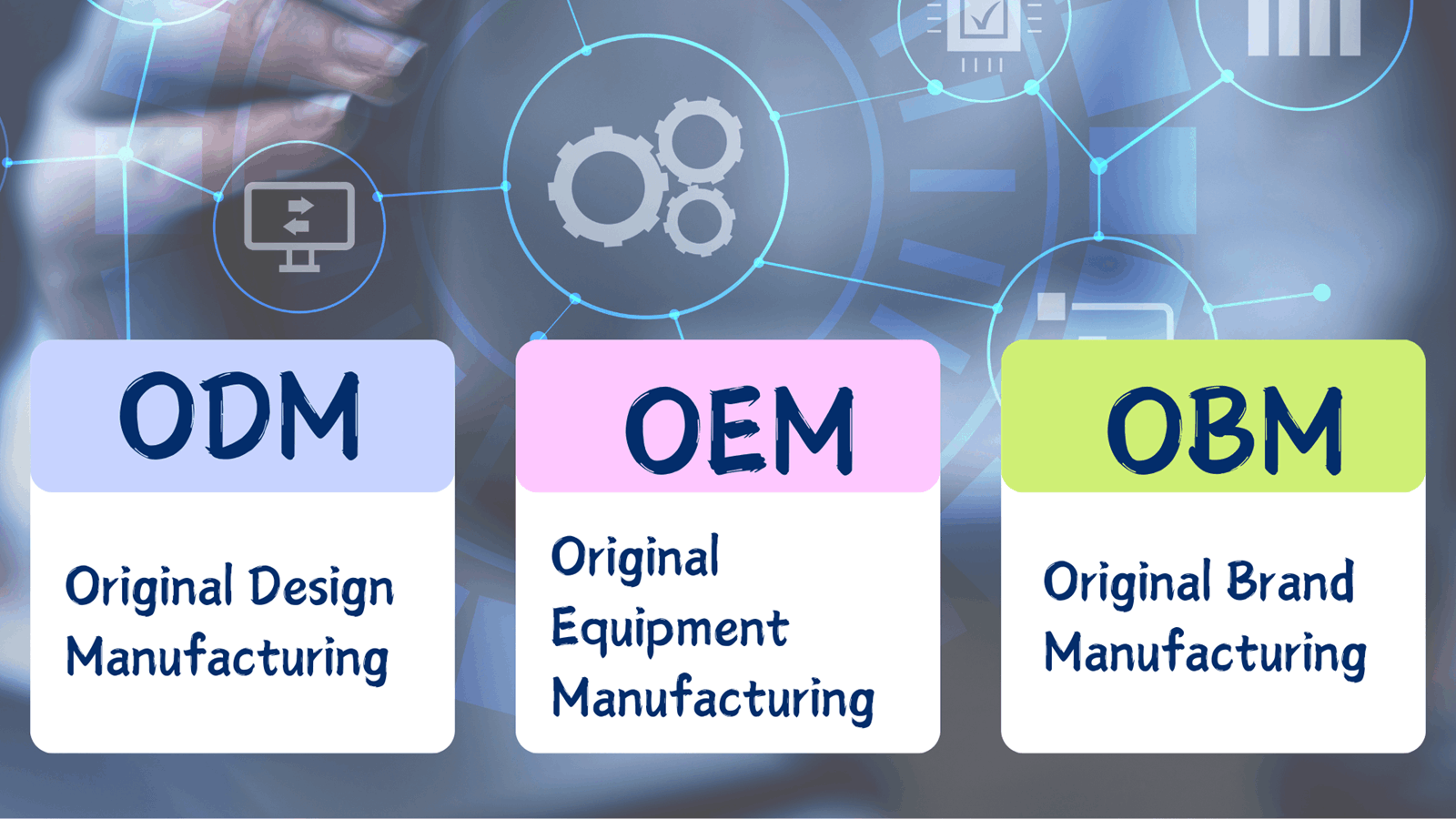
Original Equipment Manufacturer Example
There are several OEM examples you should know. Here are two best examples to consider:
OEM in the Auto Industry
An Original Equipment Manufacturer in the automotive sector is a business that creates parts and components utilized in the creation of automobiles by other businesses. For instance, a business that produces auto engines or transmission systems might sell such components to a firm that builds cars, which would then use them in their creations. Delphi is an illustration of an OEM in the automotive sector. They manufacture a range of automobile parts, such as fuel injection systems, power electronics, and engine management systems. Delphi sells these components to many of the world's major automakers, such as Ford, General Motors, and BMW, which use them in the production of their vehicles.
Continental AG, a German business that specializes in the production of tires, brakes, and other automotive components, is another illustration of an OEM in the automotive sector. Continental sells its products to a wide range of automakers, including Volkswagen, Toyota, and Mercedes-Benz. OEMs play an essential role in the auto industry, as they help car manufacturers to construct vehicles with high-quality, reliable parts that meet the tight standards of the industry. By outsourcing the production of components to OEMs, automobile manufacturers can concentrate on designing and assembling their automobiles without worrying about the production of individual parts.
As such, the auto industry relies primarily on the experience and innovation of OEMs to provide the high-quality, safe, and reliable vehicles that consumers desire. Without the contributions of companies like Delphi and Continental, the industry would struggle to produce the advanced vehicles that we see on the roads today.
OEM in the Electronics Industry
There are OEM companies in the electronics sector that create electronic devices and components, which are then used by other businesses to create finished goods. Instead of being sold under the OEM names of the companies that made the individual components, these finished products are frequently sold under the brand names of the companies that assemble them. For example, let's imagine the creation of a smartphone. The smartphone producer would normally obtain the various electronic components, such as the microprocessor, display, memory, and camera, from separate OEMs. These OEMs specialize in mass-producing these particular components, frequently with great accuracy and efficiency.
These parts would also be put together to create the finished smartphone, which the smartphone manufacturer would sell under their own brand. This enables the manufacturer to concentrate on the product's design and marketing rather than the manufacturing of individual components. One of the main benefits of using OEMs is that they can produce components at a lower cost than a single company would be able to. This is because the OEMs can take advantage of economies of scale and specialized expertise to produce high-quality components efficiently. Another benefit of using OEMs is that it allows companies to focus on their core competencies. For example, a smartphone manufacturer may specialize in design and marketing, but may not have the expertise or equipment necessary to produce high-quality camera sensors. By using an OEM for the camera sensors, the smartphone manufacturer can focus on their core competencies and still produce a high-quality product.
OEMs are often employed outside of the electronics sector in the automobile sector as well. For instance, a vehicle maker may buy engines, gearboxes, and other components from OEMs. This enables the automaker to concentrate on the end product's design and assembly rather than the fabrication of individual components. OEM usage has increased as businesses try to optimize their manufacturing processes and concentrate on their core capabilities in several industries. Using OEMs enables businesses to create high-quality goods at reduced costs while gaining access to their specialized knowledge.

Who Uses Original Equipment Manufacturers?
OEM is a popular business strategy that is employed by lots of firms in a variety of sectors, including the automotive, electronics, and technology industries. For example, OEM parts are created by a business and sold to automakers who use them to construct their automobiles in the automotive industry. These components include sensors, switches, engines, gearboxes, and brakes. The production of high-quality automobiles that adhere to the standards set by the automaker is ensured by the use of OEM parts.
Application
Most OEM vendors provide parts and components for a variety of goods, including cellphones, laptops, and televisions, in the electronics sector. Microprocessors, memory chips, and screens could be some of these components. These products' use of OEM parts guarantees their dependability, performance, and compatibility with other parts of the product. Most OEMs provide hardware and software parts for diverse products including servers, networking gear, and printers. Motherboards, graphics cards, and operating systems may be some of these components. These products are dependable, secure, and effective since OEM components are used in their construction.
Moreover, OEMs are essential to the manufacturing sector. They manufacture high-quality parts and components that are incorporated into a variety of goods, guaranteeing that these goods are dependable, effective, and fit the requirements established by the business that sells them under their own brand name.
The cost of many OEM parts is frequently lower than that of parts made by the firm that sells the finished product. This is so that OEMs, who specialize in manufacturing particular parts, may do it more quickly than businesses that make a variety of goods. Additionally, OEM components are often more reliable than components made by businesses that sell the entire product. This is because OEMs employ better materials and production techniques and have more knowledge and competence making these products.
OEM Parts Disadvantage
Using OEM parts might have the drawback of being less flexible or adaptable than parts made by the firm that sells the finished product. This is because OEMs manufacture parts to satisfy certain standards and might not be able to modify the parts to fit the particular requirements of different clients.
The use of OEM components has both benefits and drawbacks, but they are still a vital component of the manufacturing sector and will continue to be important in the creation of high-quality goods.
What Is an OEM Partner?
An OEM partner is a company that collaborates with another company to produce a product under the partner's brand name. This type of partnership is prevalent in the technology industry, but it is also used in other industries. When a company becomes an OEM partner, they agree to manufacture products according to the specifications of the partner company. This means that the partner company's brand name is prominently displayed on the product. The OEM partner is responsible for the production, assembly, and packaging of the product.
Companies may gain a lot from working with OEM partners on OEM ecommerce. Secondly, it enables them to expand their audience by using the partner company's brand name. In order to create laptops that are offered under the partner's brand name, a smaller computer manufacturer could collaborate with a bigger computer manufacturer. By doing this, the smaller company gains from the larger firm's established brand. Moreover, OEM alliances let businesses concentrate on their core strengths. For instance, a business that specializes in making computer components may collaborate with a business that focuses in putting computers together. That is the only way to achieve the best results.
Eventually, OEM collaborations may be profitable for both sides. Although the OEM partner benefits from greater production volume and income, the partner firm benefits from increased sales and a wider market reach.
However, there are also possible downsides to becoming an OEM partner. For example, the OEM partner might need to give up some of their control over the finished product. They may also have to accept reduced profit margins, as they are effectively making things for another company's brand.
For businesses wishing to broaden their market reach while concentrating on their core skills, entering into an OEM partnership might be a wise business decision. To make sure that the relationship is a suitable fit for all sides, it is crucial to thoroughly weigh the potential disadvantages.

What Is the Difference Between OEM and ODM?
When it comes to manufacturing, there are a lot of technical terms that can be confusing. Two such terms that are often used are OEM and ODM. Here, we will explain the differences between OEM and ODM, as well as OEM and aftermarket parts, so that you can make informed decisions when purchasing products and parts.
ODM vs. OEM
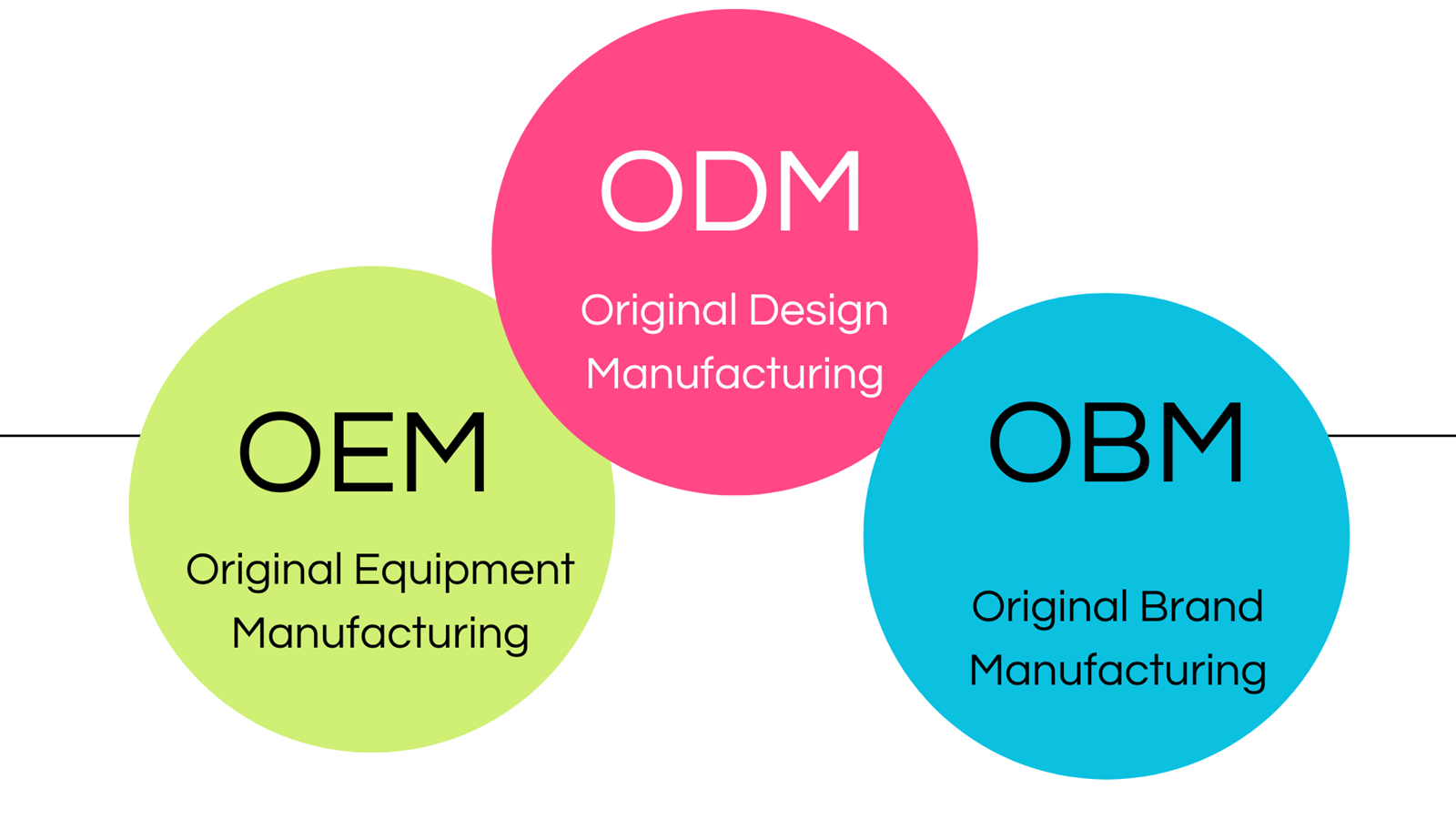
OEM stands for Original Equipment Manufacturer. OEM vendor refers to a company that produces components or products that are used in another company's end product. For example, a company that produces car tires is an OEM, as it sells its products to car manufacturers who then use those tires in their cars. The OEM is responsible for designing and manufacturing the product to meet the specifications of the customer, who then sells the product under their own brand name.
ODM, on the other hand, stands for Original Design Manufacturer. ODM refers to a company that designs and manufactures a product that is sold to another company who then sells the product under their own brand name. For example, a company that designs and manufactures smartphones that are sold under another company's brand name is an ODM. The ODM is responsible for both the design and manufacture of the product, and the customer sells the product under their own brand name.
In summary, the main difference between OEM and ODM is that an OEM produces components or products for another company's end product, while an ODM designs and manufactures a product that is sold to another company to sell under their own brand name.
OEM vs Aftermarket Parts
When it comes to purchasing parts for your vehicle, you will often come across two types of parts: OEM and aftermarket. OEM parts are parts that are made by the same manufacturer that made your vehicle. Aftermarket parts are made by a third-party manufacturer.
OEM Parts
Various OEM components are produced by the same manufacturer that made your car. These components have been meticulously created to match your vehicle's precise specs. As a result, original components are frequently more expensive than aftermarket components. Yet, since OEM components are better quality and less prone to create problems with your car, the additional expense is frequently justified. A guarantee is also frequently included with OEM components, which means that if the component breaks, the manufacturer will replace it at no extra cost to you.
Aftermarket Parts
Aftermarket parts are made by third-party manufacturers. These parts are designed to fit a wide range of vehicles, not just one specific make and model. Because of this, they may not fit as well as OEM parts. Additionally, aftermarket parts may not be made to the same quality standards as OEM parts, which means that they may not last as long or may cause issues with your vehicle. However, aftermarket parts are often less expensive than OEM parts, which makes them an attractive option for those on a budget.
Which to Choose: OEM or Aftermarket Parts?
When choosing between OEM and aftermarket parts, there are a few things to consider. First, consider the cost. If you are on a budget, aftermarket parts may be a better option for you. However, keep in mind that they may not last as long or may cause issues with your vehicle. If you are looking for a higher-quality part that is designed to fit perfectly and comes with a warranty, OEM parts are the way to go.
Another thing to consider is the make and model of your vehicle. Some vehicles require OEM parts to function properly. If you have a newer vehicle, it may be best to stick with OEM parts, as aftermarket parts may not be designed to work with the latest technology, such as sensors and electronic control systems.
Also Read:
- Best Websites for Manufacturers 2024
- What Is MSRP?
- Find Indian Manufacturers 2024
- Find a Manufacturer in China 2024
- Best Clothing Manufacturers in China 2024
- Manufacturers vs. Distributors
- Supplier vs. Manufacturer
- Clothing Manufacturers for Startups
- Buy a Car Direct from Manufacturers
- What Is an OEM?
- Buy Products Direct from Manufacturers
- Find a Manufacturer or Supplier
FAQ
1. What Does OEM Mean?
"Original Equipment Manufacturer" is referred to as OEM. A firm that manufactures computer processors or memory modules for computers made by other companies, for instance, would be an OEM.
The phrase "original equipment manufacturer" (OEM) is frequently used in the technology sector, but it may also be used in various industries. It is widely used in the automotive sector, as well as in aerospace, consumer electronics and medical equipment, where a firm may develop parts that are utilized in machines or equipment made by another company. Although OEM goods frequently cost less than branded goods since they are produced by the same manufacturer, they are nonetheless of high quality. That is because they are created especially to function with the goods of the other firm.
2. What Is an Example of an OEM?
OEM stands for Original Equipment Manufacturer, and it refers to a company that produces parts and equipment that are used in another company's product. One example of an OEM is Intel, which produces computer processors that are used in computers made by companies like Dell and HP.
Intel is an example of an OEM because they do not produce the final product (in this case, a computer) that is sold to consumers. Instead, they provide a key component (the processor) that is used by another company to produce the final product. This is a common business model in many industries, as it allows companies to focus on their core competencies while outsourcing other components to specialized suppliers.
3. Does OEM Mean Fake?
No, OEM does not mean fake. OEM stands for Original Equipment Manufacturer, which refers to a company that produces components or products that are used in another company's end products. These components or products are typically sold to the other company for use in their own products, rather than sold directly to consumers.
For example, if a company produces computer motherboards, they may sell those motherboards to a computer manufacturer who will then use them in their own computers. The motherboard manufacturer is an OEM, but the computers sold by the computer manufacturer are not fake. OEM products are generally considered to be of high quality, as they are produced by specialized manufacturers with expertise in their particular component or product.
It's important to distinguish OEM products from counterfeit or knock-off products. Counterfeit items are unauthorized replicas that are made to deceive consumers into thinking they are purchasing genuine products. In contrast, OEM products are legitimate components produced by authorized manufacturers.
So, OEM does not mean fake, but rather refers to a specific type of manufacturing process.
4. What Is OEM and ODM?
The terms OEM and ODM are often used in the manufacturing industry. OEM refers to a company that produces goods or components that are marketed and offered for sale under the trade name of another company. To put it another way, an OEM company is in charge of manufacturing a product in compliance with the standards established by another business.
As opposed to OEM companies, ODM companies design and manufacture their own products before selling them to other companies that market these under their own names or brands.
Both OEM and ODM businesses are crucial to the manufacturing sector. OEM companies help other companies save production costs by making components and products at a reduced cost, whereas ODM companies offer a complete solution by developing and manufacturing.
The use of OEM and ODM allows companies to quickly adapt to market demands and technological changes without the need for significant investment in manufacturing infrastructure.
5. What Does Original Equipment Manufacturer (OEM) Mean in Cars?
The term "original equipment manufacturer" is used in the automobile industry to describe businesses that make the tools and components utilized in the construction of cars. OEM parts are those manufactured by the same company that made the original components used in producing a vehicle.
OEM parts are frequently employed by automakers in their assembly lines since these components are designed to meet the same requirements and quality standards as the original components used in vehicle production. Although OEM components are normally more expensive than aftermarket parts, they are typically regarded as being of higher quality and more dependable. OEM components are available for purchase through authorized auto dealers or online retailers.
6. What Does Original Equipment Manufacturer (OEM) Mean in Software?
In the software industry, an OEM is a business that develops software that is often tailored to work specifically in a device or product made by another business. The software is developed by the OEM firm and licensed to the other company for use in their product. The software may not be supplied to end consumers separately, since it is often made to function precisely with the hardware of the other company's product.
For instance, a smartphone maker may employ an OEM's software to power the phone's camera or display. The OEM would offer the appropriate software and support to guarantee that the camera or display works correctly in the smartphone. This lets the smartphone maker focus on their primary business of providing hardware, while relying on the knowledge of the OEM to provide high-quality software solutions.
7. What Is OEM in Manufacturing?
OEM, or original equipment manufacturer, is a term used in the manufacturing sector. It describes a company that produces parts or items that are later incorporated into products produced by other companies and marketed under their brand name. OEM products are frequently built to the specifications of the company that purchases them, rather than for the general market.
As a result, the purchasing company may concentrate on its core competencies while relying on the OEM's expertise to provide superior components that meet their specific needs.
8. What Is the Difference Between OEM and Manufacturer?
Even though the phrases OEM and manufacturer are sometimes used interchangeably, they have different definitions. A manufacturer is a business that produces finished goods. This term encompasses a wide range of businesses that create products from raw materials to final items ready for sale.
On the other hand, an OEM specifically refers to a company that manufacturers components or parts that are incorporated into a final product created by another company.
To put it another way, an OEM gives parts to a manufacturer. Both companies are involved in the creation of commodities, but the main distinction is that manufacturers create the finished product, whereas OEMs create parts that go into the finished product.
9. What Does OEM Stand for in China?
Like in many other nations, in China, OEM is an acronym for "Original Equipment Manufacturer". It is a phrase used to describe a business that produces items or components that are subsequently incorporated into the products of other businesses. There are several OEM factories in China that create a wide range of products, including textiles, automobile parts, and electronic components.
Some factories collaborate closely with other businesses to create items that are created specifically for them. The OEM sector makes a sizable contribution to China's manufacturing sector and has aided its development as a major player in global manufacturing.
An OEM creates components or parts that are utilized by another business to make a finished product. The OEM manufactures the component in accordance with the requirements given by the purchasing firm, which utilizes it to create its own product. This enables the buying business to concentrate on its core skills while utilizing the OEM's knowledge of certain components. In the manufacturing industry, OEMs enable companies to produce high-quality goods that satisfy the expectations of their clients. The components manufactured by OEMs are often designed to meet rigorous quality control standards, which contributes to the overall reliability of the final product.
You May Also Like:
How to Safely Source and Sell Products on GlobalSources.com
What is Original Design Manufacturing (ODM)?
[2025] Ultimate Guide: What is Contract Manufacturing?
2025 Ultimate Guide: What Is Original Brand Manufacturing (OBM)?
Decoding ODM, OEM, & OBM: Manufacturing Models Explained with Real-World Cases

